How to Care for an Oil Painting: Cleaning, Hanging, and Everyday Protection
Caring for an oil painting is essential if you want to preserve its color depth, texture, and long-term value. Unlike prints or digital artwork, oil paintings are highly sensitive to environmental conditions such as humidity, dust, light exposure, and physical handling. Proper maintenance ensures that the artwork remains visually vibrant and structurally stable for decades or even centuries.
1. Understanding How to Care for an Oil Painting
To properly care for an oil painting, it is important to break the process into three core areas: cleaning, hanging, and everyday protection.
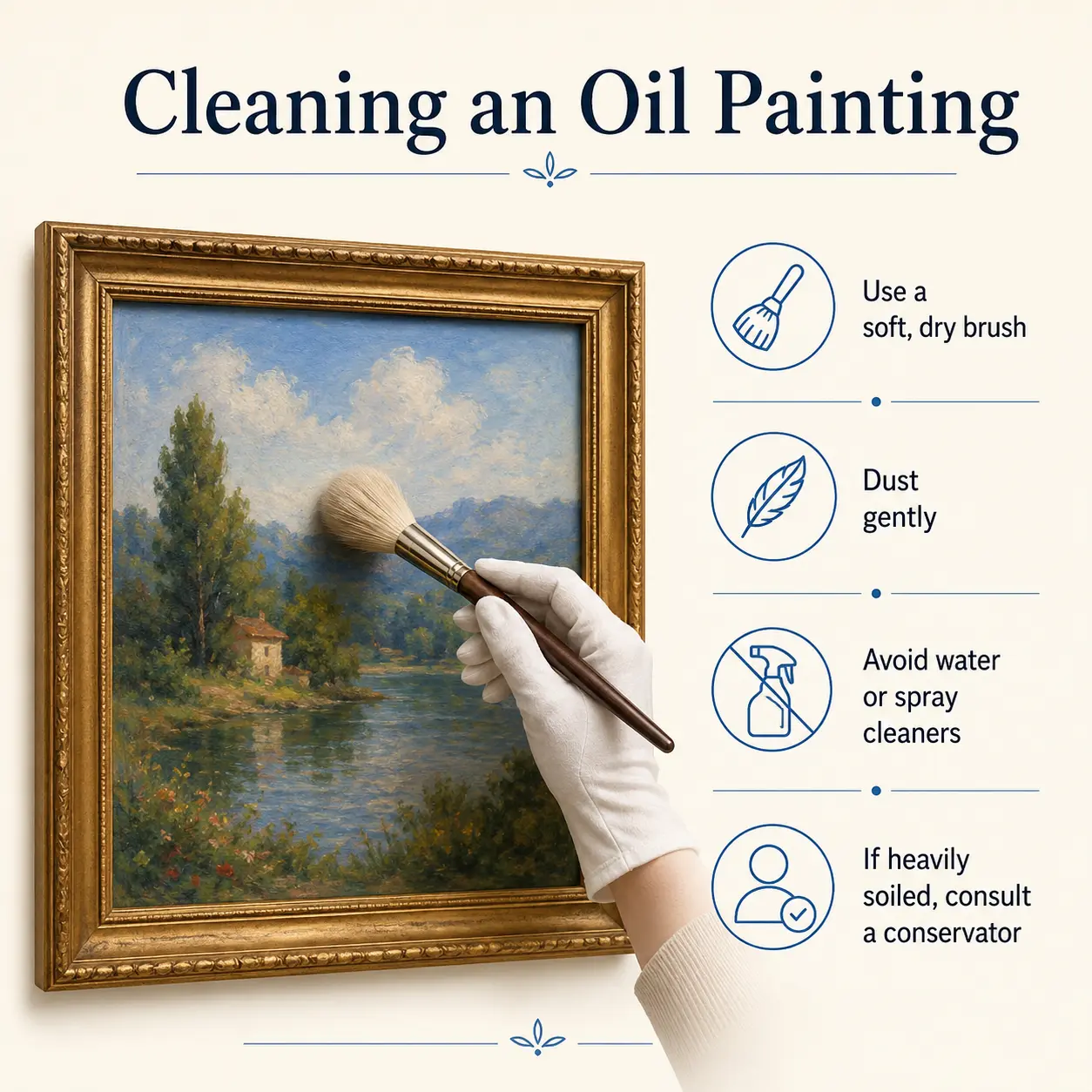
Cleaning involves removing surface dust without damaging the paint layer. Oil paint can be fragile when exposed to moisture or chemicals, so dry cleaning methods are typically preferred.
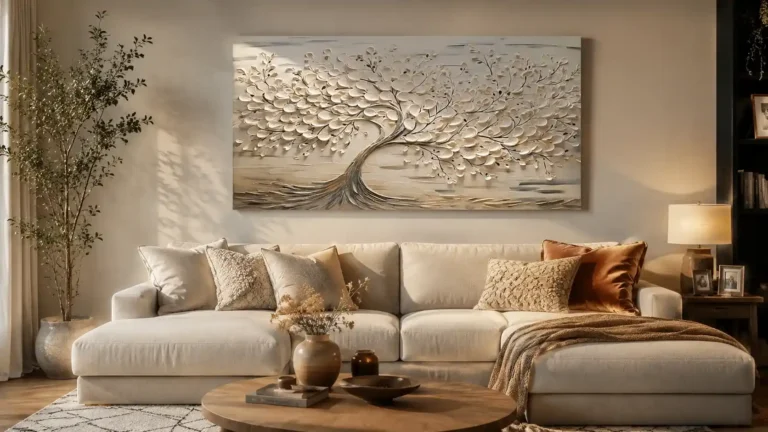
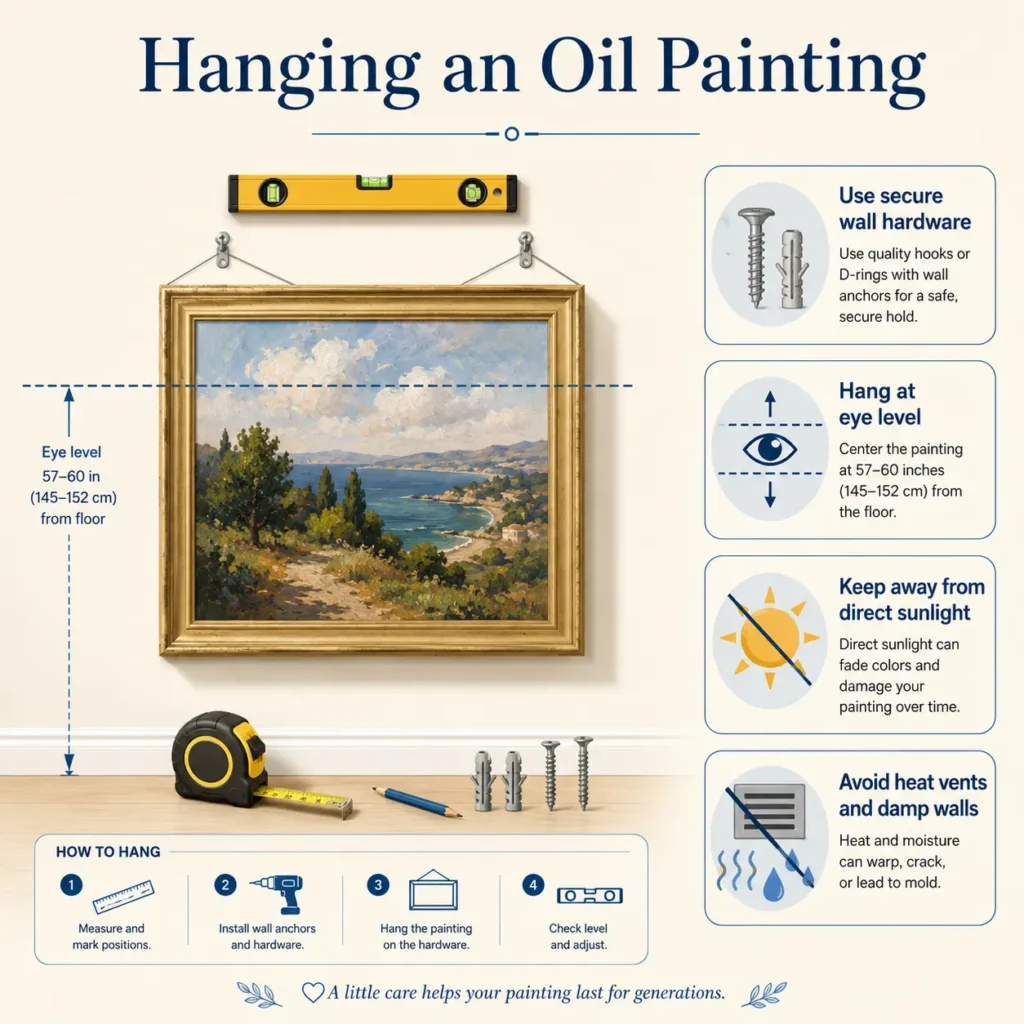
Hanging refers to how and where the painting is displayed. Improper placement can lead to fading, warping of the canvas, or even physical damage if it falls.
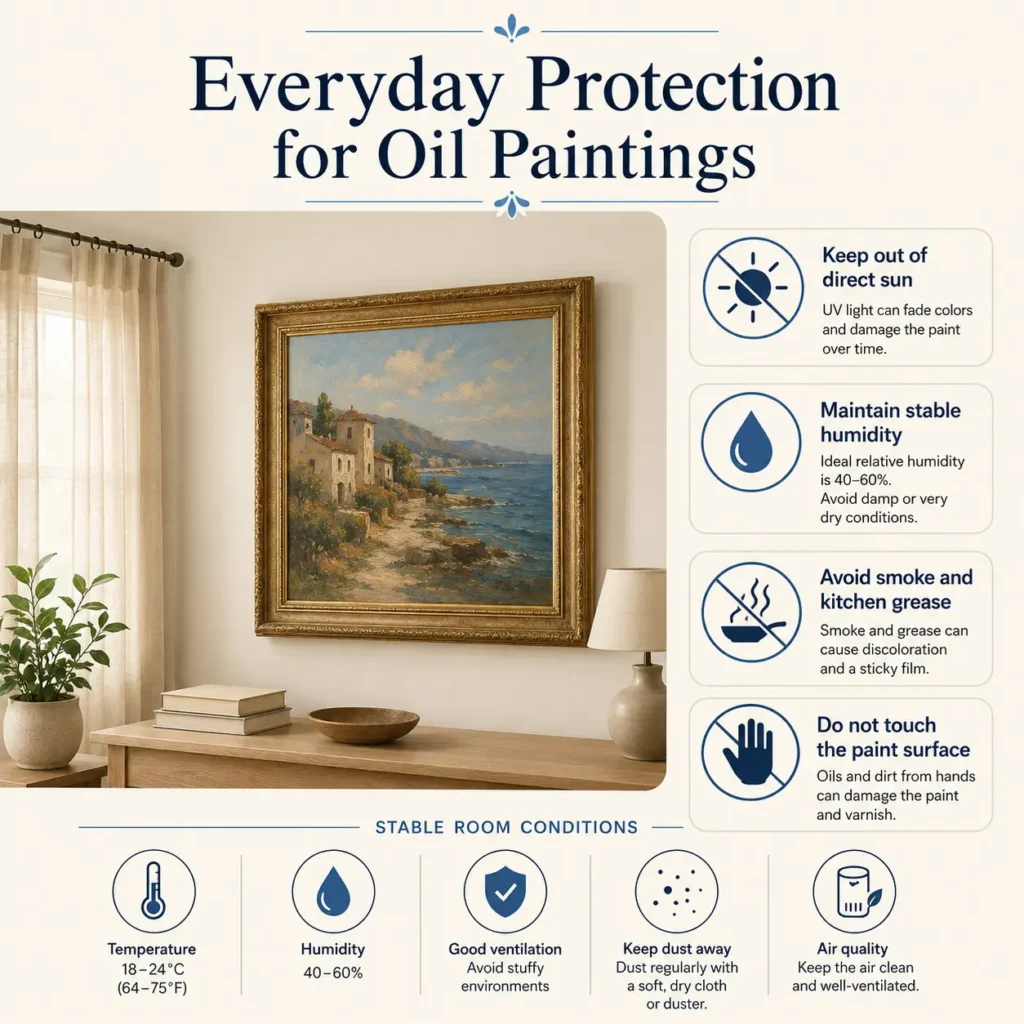
Everyday protection includes controlling environmental factors such as sunlight, humidity, and temperature fluctuations that can gradually degrade the artwork.
Together, these three aspects form the foundation of proper oil painting care.
2. Common Questions About Oil Painting Care
Q1: Can I clean an oil painting with water or household cleaners?
No. Water, alcohol, and household cleaners can damage the varnish and paint surface. Instead, use a soft, dry microfiber cloth or consult a professional conservator for deep cleaning.
Q2: What is the safest place to hang an oil painting?
The safest place is a stable indoor environment away from direct sunlight, heat sources, and high humidity. Avoid kitchens and bathrooms, as steam and grease can accelerate deterioration.
3. Benefits of Proper Oil Painting Care
Taking care of an oil painting offers several important benefits:
- Preserves artistic value: Well-maintained paintings retain or even increase in value over time.
- Extends lifespan: Proper care prevents cracking, fading, and canvas deterioration.
- Maintains visual quality: Colors remain rich and textures stay intact.
- Reduces restoration costs: Preventative care is far cheaper than professional restoration work.
4. Step-by-Step Guide to Caring for an Oil Painting
Step 1: Dust Regularly
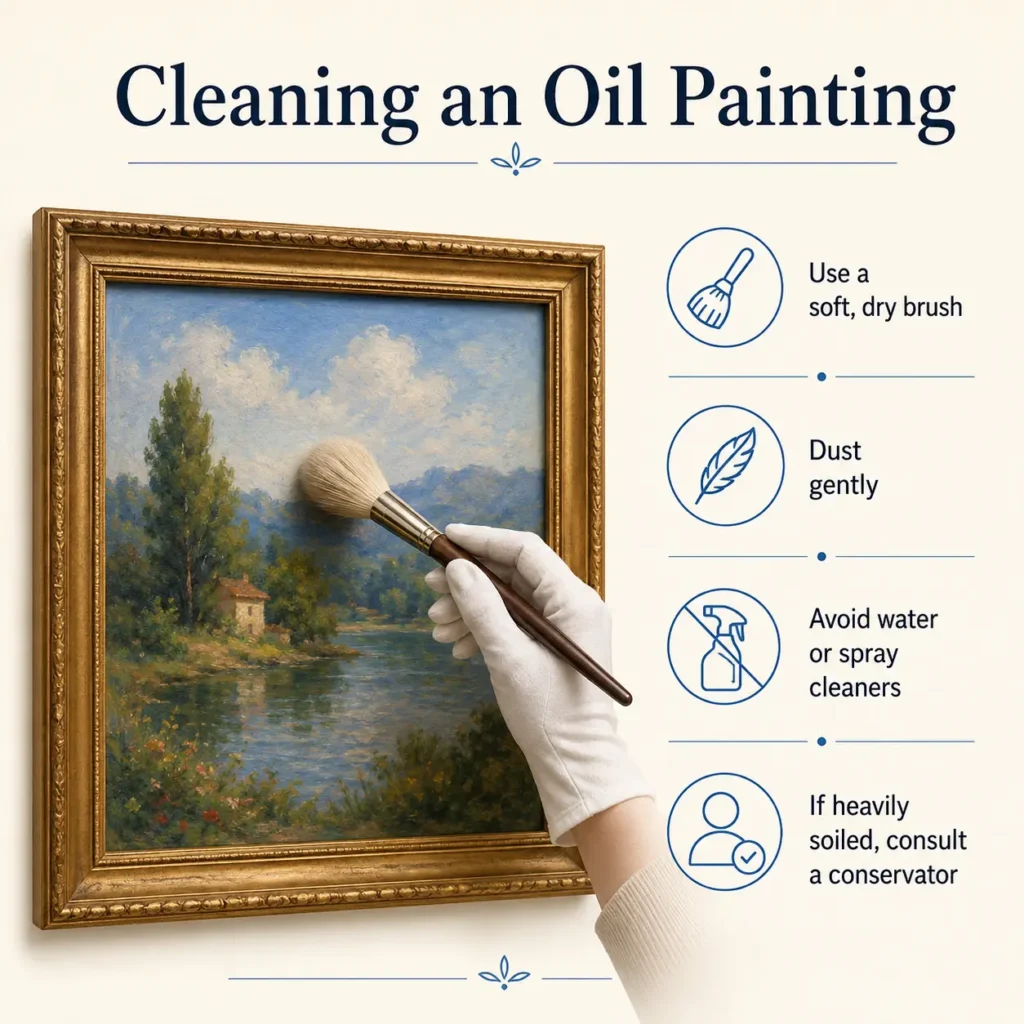
Use a clean, dry microfiber cloth or soft brush to gently remove dust from the surface. Do not apply pressure.
Step 2: Avoid Direct Sunlight
Hang the painting in a shaded area or use UV-protective glass if framing is possible.
Step 3: Control Humidity and Temperature
Keep indoor humidity between 40–55% and avoid extreme temperature changes.
Step 4: Use Proper Hanging Hardware
Install strong hooks and secure wire supports to prevent accidental falls.
Step 5: Handle with Clean Hands or Gloves
Always hold the frame, not the canvas, and avoid touching the painted surface.
Step 6: Inspect Periodically
Check for early signs of cracking, mold, or discoloration every few months.
5. Practical Results of Proper Care
When oil paintings are properly maintained, several positive outcomes can be observed:
- The painting retains its original color vibrancy for decades.
- The canvas remains tight and structurally stable without sagging.
- Dust buildup is minimal, making cleaning easier and safer.
- The artwork maintains higher resale and collectible value over time.
FAQ
1. How often should I clean an oil painting?
Light dusting every 1–3 months is usually sufficient, depending on the environment.
2. Can I restore an old oil painting myself?
Minor cleaning is fine, but restoration should always be done by a professional conservator.
3. Should oil paintings be framed with glass?
Not always. Many oil paintings are displayed without glass to preserve texture, but UV-protective glazing can be helpful in bright environments.
4. What is the biggest enemy of oil paintings?
Excessive humidity, direct sunlight, and improper handling are the main threats.