Why Are Some Oil Paintings So Expensive? A Simple Price Breakdown for Buyers
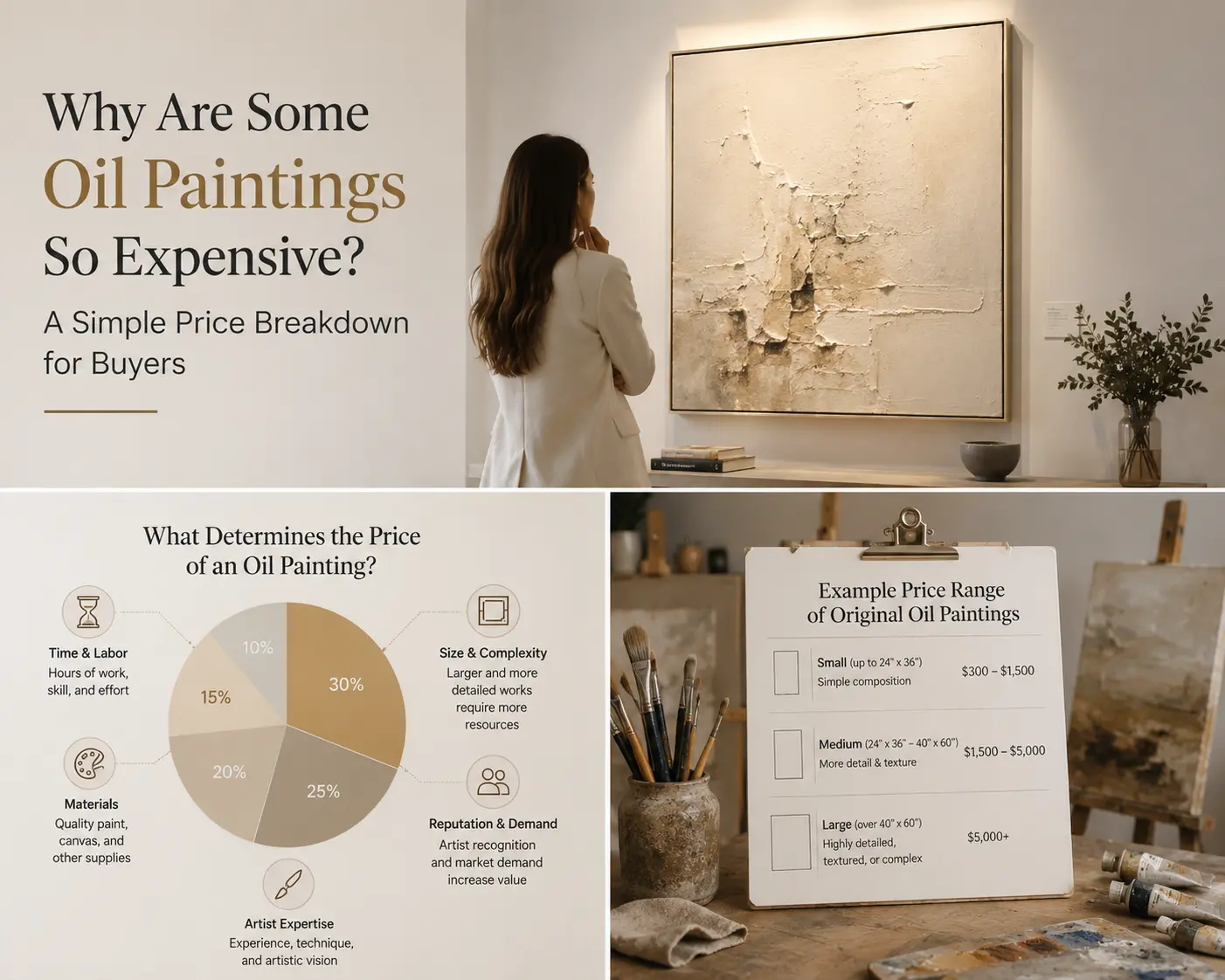
Why are some oil paintings so expensive? This is one of the most common questions asked by first-time art buyers. The price of an original oil painting can range from a few hundred dollars to tens of thousands, depending on the artist, materials, size, and reputation. In this simple price breakdown for buyers, you’ll learn what determines the value of original oil paintings and how to understand whether a piece is worth the investment.
Understanding Why Some Oil Paintings Cost More Than Others
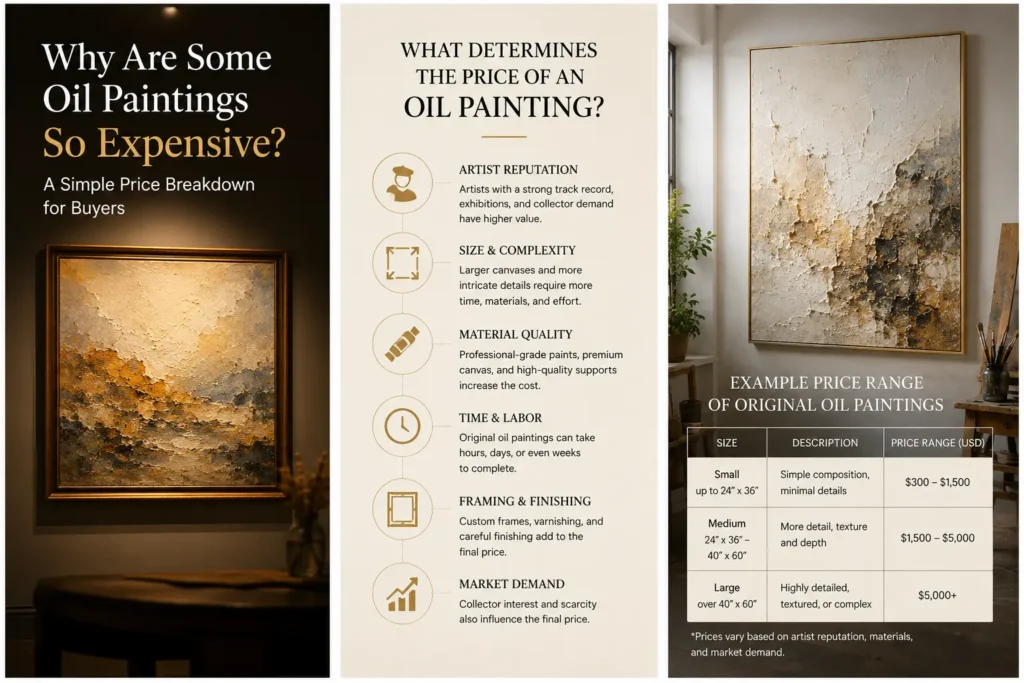
The cost of an oil painting is influenced by several important factors. Unlike mass-produced prints, original oil paintings are one-of-a-kind works that require significant time, skill, and materials.
1. Artist Experience and Reputation
Artists who have spent years refining their craft typically command higher prices. If an artist has exhibited internationally, won awards, or built a collector base, their work becomes more valuable.
2. Size of the Painting
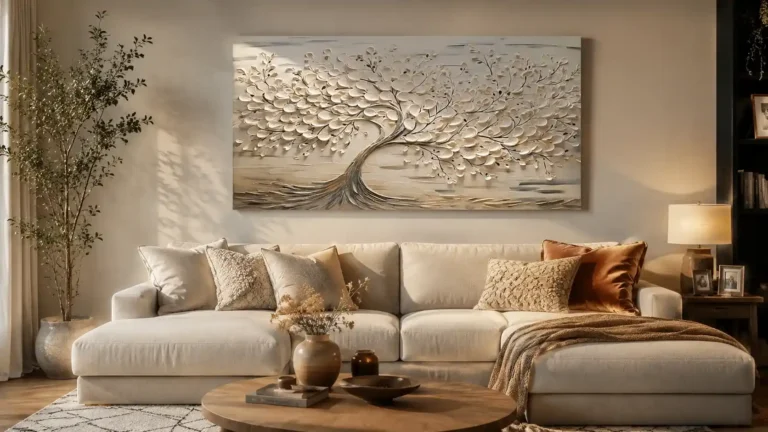
Large oil paintings require more canvas, more paint, and many more hours of labor. Oversized textured wall art can take weeks to complete.
3. Material Quality
Professional-grade oil paints, gallery-quality linen or cotton canvas, and solid wood stretcher bars are considerably more expensive than student-grade supplies.
4. Time and Labor
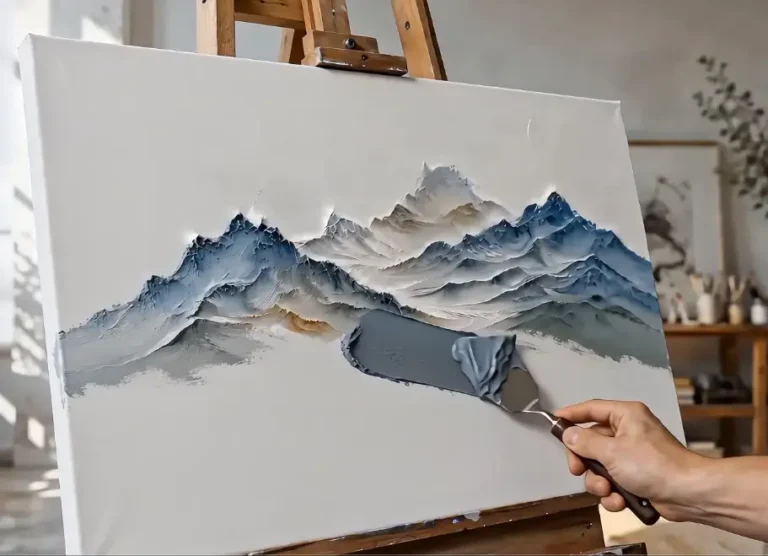
A complex painting may require dozens or even hundreds of hours. Layering, drying times, revisions, and finishing all add to the cost.
5. Originality and Artistic Vision
Buyers are paying not only for materials but also for creativity, composition, and the artist’s unique perspective.
6. Framing and Finishing
Custom floating frames, varnishing, and secure packaging can significantly increase the final price.
7. Market Demand
If collectors are actively seeking an artist’s work, prices often rise as availability decreases.
Two Common Questions Buyers Ask
Why Is One Oil Painting $500 and Another $5,000?
The difference usually comes down to:
- Artist reputation
- Originality
- Size and complexity
- Material quality
- Collector demand
A decorative painting produced quickly may cost a few hundred dollars, while a museum-quality original by an established artist may cost several thousand dollars.
Are Expensive Oil Paintings Actually Worth It?
In many cases, yes.
An expensive original oil painting offers:
- Unique, one-of-a-kind artwork
- Superior craftsmanship
- Long-lasting materials
- Potential appreciation in value
- Emotional and aesthetic significance
If you buy from a reputable artist or gallery, the price often reflects genuine artistic value.
Benefits of Understanding Oil Painting Prices
Knowing how oil paintings are priced helps buyers make confident and informed decisions.
Better Value Assessment
You can distinguish between overpriced decorative pieces and genuinely valuable original artwork.
Smarter Investment Decisions
Some artworks appreciate over time, especially those by emerging artists.
Greater Appreciation
Understanding the process behind the work increases your appreciation of the artist’s effort and skill.
More Confident Purchases
You’ll know exactly what you’re paying for and why.
How to Evaluate Whether an Oil Painting Is Worth the Price
Step 1: Research the Artist
Look at their biography, exhibitions, collector reviews, and professional achievements.
Step 2: Examine the Materials
Check whether the artist uses professional-grade oil paints and archival-quality canvas.
Step 3: Consider the Size and Complexity
Large, textured, and highly detailed paintings generally require more labor and resources.
Step 4: Ask About the Creation Process
Understanding how long the piece took to create provides useful pricing context.
Step 5: Review Similar Works
Compare prices with other artists of similar experience and style.
Step 6: Verify Authenticity
Ensure the artwork comes with a certificate of authenticity and is hand-painted.
Step 7: Buy What You Truly Love
The best art purchase is one that resonates personally and enhances your space.
Real-World Pricing Examples
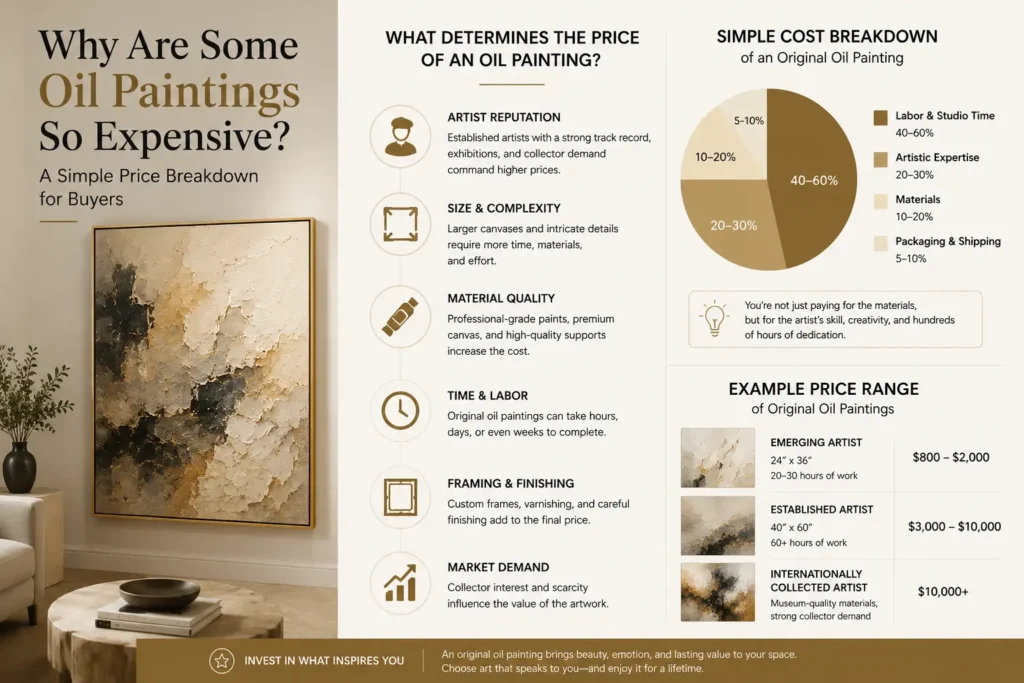
Example 1: Emerging Artist
- Size: 24 × 36 inches
- Professional materials
- 20–30 hours of work
- Price: $800–$2,000
Example 2: Established Artist
- Size: 40 × 60 inches
- Textured mixed techniques
- 60+ hours of work
- Price: $3,000–$10,000
Example 3: Internationally Collected Artist
Simple Cost Breakdown of an Original Oil Painting
| Cost Component | Typical Percentage |
|---|---|
| Materials | 10–20% |
| Labor and Studio Time | 40–60% |
| Artistic Expertise | 20–30% |
| Packaging and Shipping | 5–10% |
| Market Reputation | Variable |
Final Thoughts
Why are some oil paintings so expensive? The answer lies in the combination of artistic skill, premium materials, time-intensive craftsmanship, and market demand. When you purchase original oil paintings, you are investing in unique creative work that cannot be replicated. By understanding this simple price breakdown for buyers, you can evaluate artwork more confidently and choose pieces that offer both emotional and long-term value.
Frequently Asked Questions
Why do original oil paintings cost more than prints?
Original oil paintings are hand-created, one-of-a-kind works, while prints are reproduced copies.
How much should a good original oil painting cost?
Prices vary widely, but quality originals often range from $500 to $5,000 or more depending on size and artist reputation.
Are expensive oil paintings a good investment?
They can be, especially if the artist gains recognition and collector demand increases over time.
What factors affect oil painting prices the most?
Artist reputation, size, materials, time, and market demand have the biggest impact.
Is large textured wall art more expensive?
Yes. Large textured pieces require more materials and significantly more labor, which increases their price.