Oil Painting vs Print: How to Choose the Right Art for Every Room
You finally have that big empty wall above your sofa or bed and a thousand options: original oil painting, canvas print, giclée print, “hand‑embellished.”
This guide breaks down oil painting vs print in a way that’s actually useful for your home.
You’ll see where it’s worth investing in a hand painted oil painting, and where a print is totally fine, room by room, living room, bedroom, dining room, entryway, and officelike having a stylist walk through your home with you.
Oil Painting vs Print Basics: What’s the Real Difference?
Section purpose: Give a clear, jargon-free overview so you feel grounded before making room-by-room decisions.
What is Oil Painting?
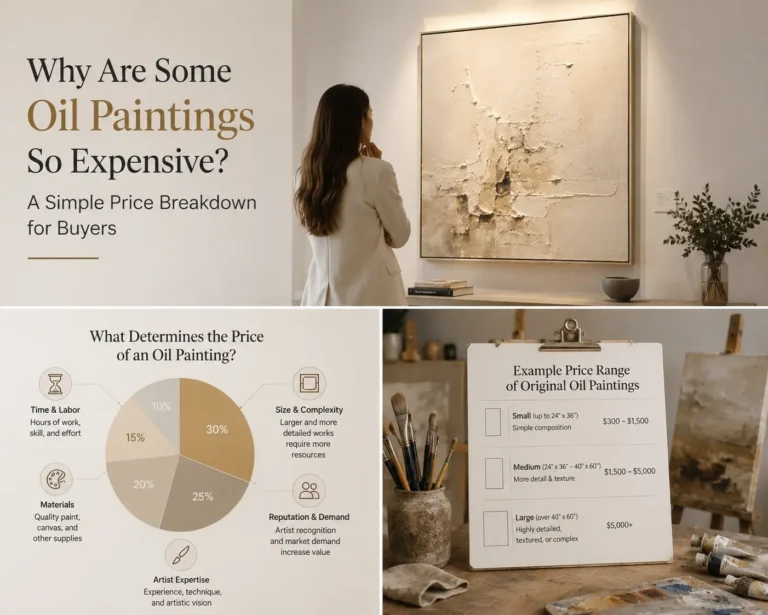
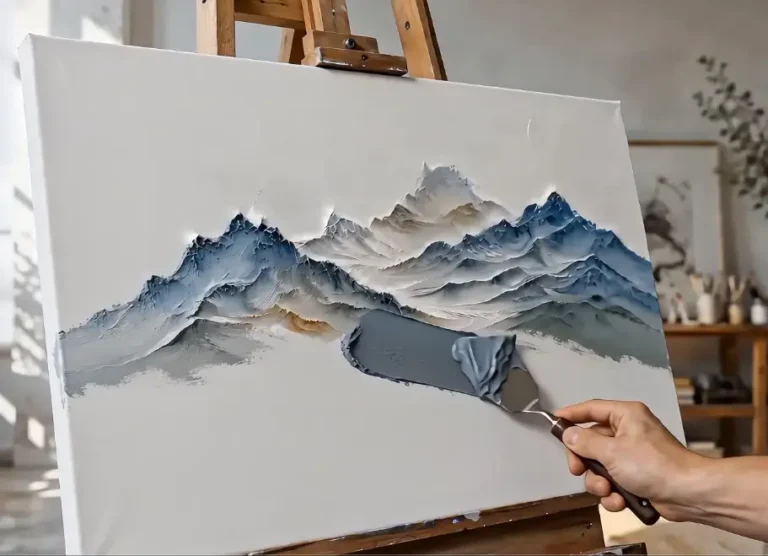
An original oil painting is an artwork created by an artist directly on a surface, usually canvas, using oil paints. Every brushstroke is applied by hand, layer by layer.
Because of that, each piece has:
- Texture you can see and feel
- Subtle variations in color and detail
- A one-of-a-kind presence, even if the artist paints a similar piece again, it will never be identical
Hand painted oil paintings like ours are not printed images. They’re more like small pieces of architecture for your walls: they catch the light, cast tiny shadows in the brushstrokes, and feel “alive” when you walk past.
What are Canvas Prints, Giclée Prints and “Hand-Embellished”?
Most prints start with a digital image or a photograph of an artwork, which is then printed on paper or canvas.
Common types you’ll see:
- Canvas print: An image printed directly on canvas (no real brushstrokes).
- Giclée print: A high-quality inkjet print with good color and detail; often used for art reproductions.
- Hand-embellished print: A print where an artist adds some paint or texture on top of the printed image.
These can look beautiful and sharp, especially from a distance, but they’re still reproductions. When listings say “canvas wall art” or “painting” without clearly saying “hand-painted,” it’s usually a print.
Texture, Depth, and Uniqueness vs Flat, Reproducible Images
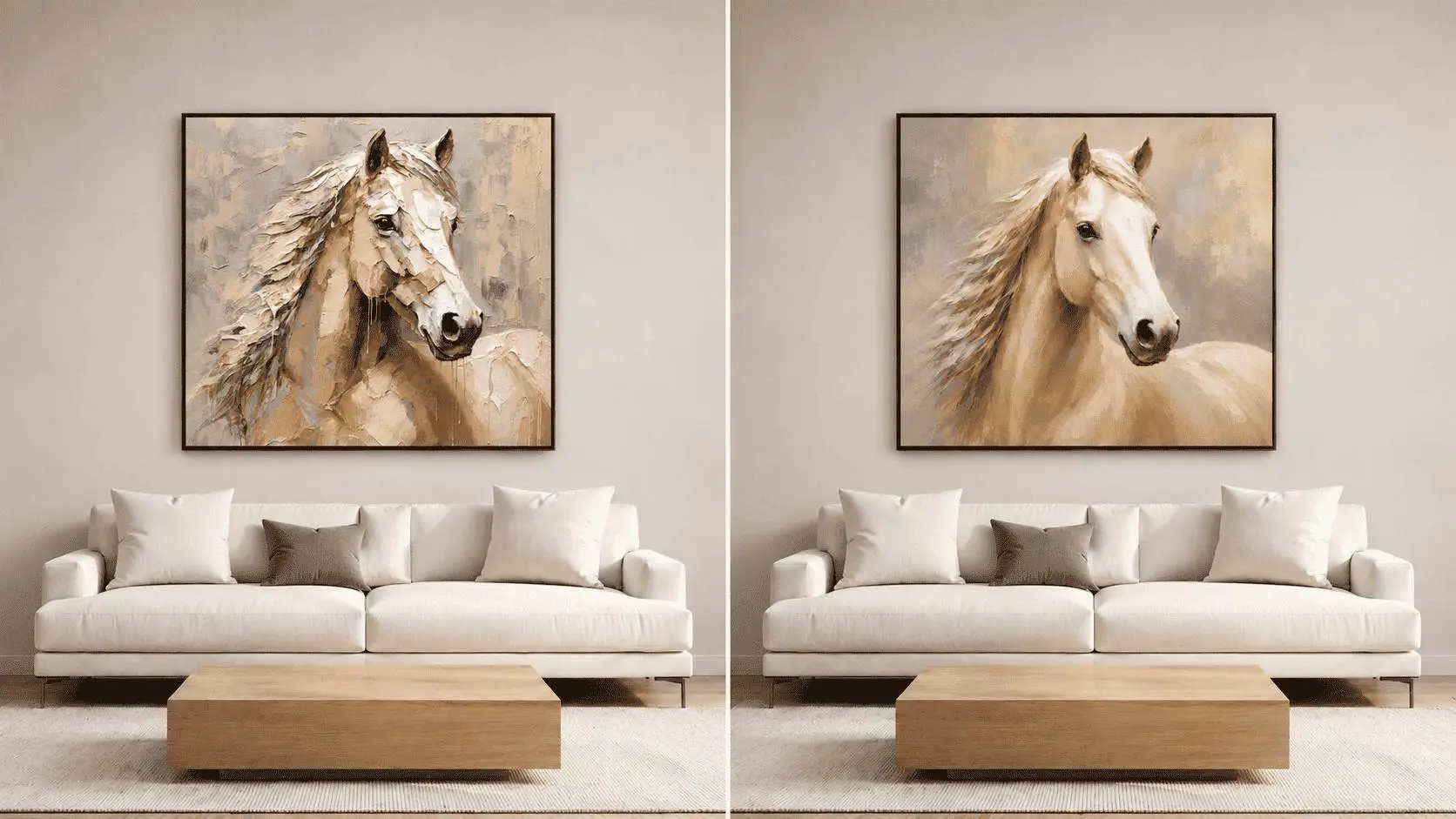
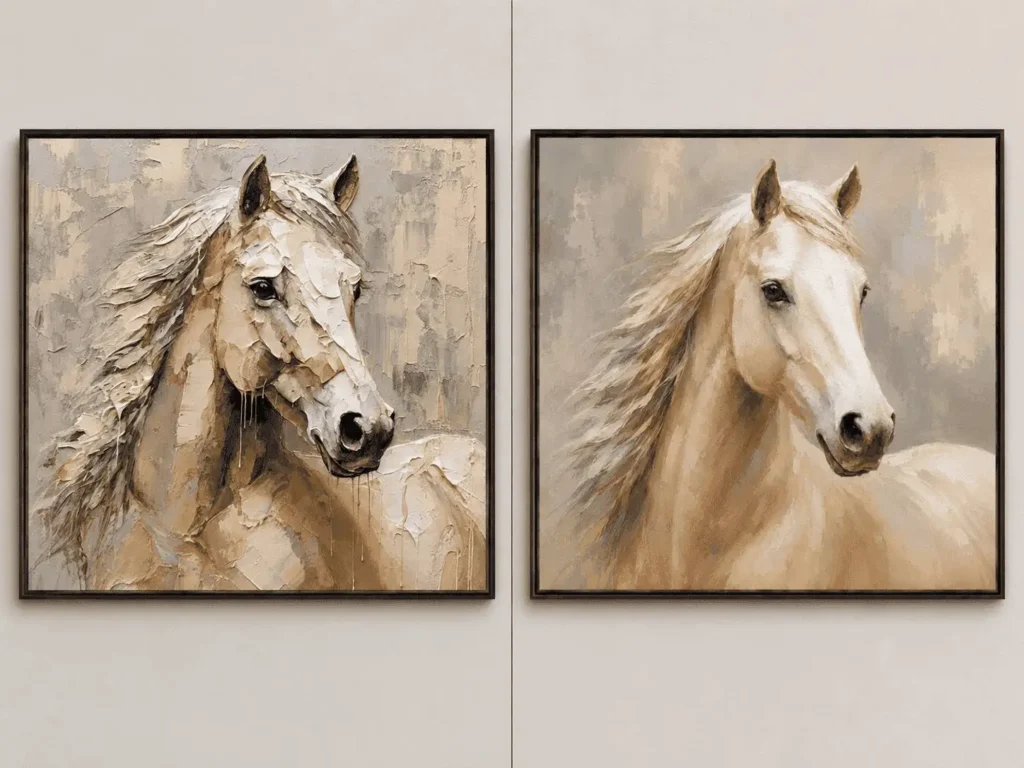
Imagine two versions of the same landscape above a sofa:
- In the print, you see the image, but the surface is flat. From the side, light slides across without catching on anything.
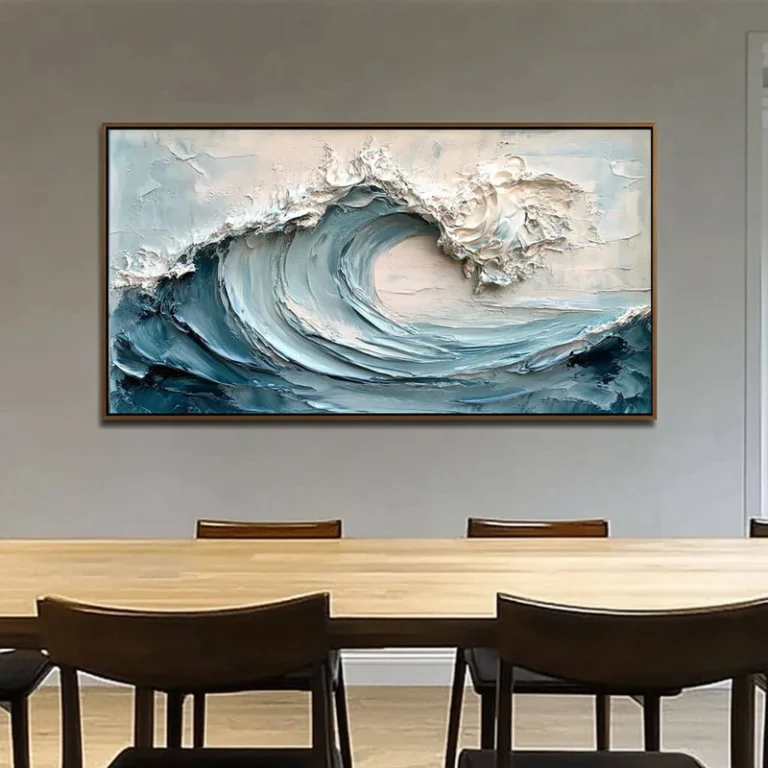
- In the oil painting, the sky’s brushstrokes have real ridges. The paint of the trees is thicker, catching light differently at different times of day.
That’s the core difference:
- Original oil painting: textured, dimensional, unique, feels “luxurious” and personal
- Print: flat, repeatable, more affordable, easy to swap out
Both can have a place in a stylish home. The key is choosing the right type for each wall.
Why Oil Painting vs Print Matters: How Art Changes a Room’s Mood?
Section purpose: Connect technical differences to real-life atmosphere, so you see why this decision affects your home’s personality.
Imagine the Same Image as a Print vs a Painting
Picture a large abstract piece in your living room in soft blues and grays:
- As a canvas print, it looks clean and modern. It fills the space and adds color, but from up close, the surface is smooth.
- As a hand-painted abstract oil painting, the layers of paint create depth. When you sit on the sofa, you see tiny shifts in color and thickness. At night, your lamps pick up highlights on the brushstrokes.
The mood shift is subtle but powerful. The painting feels like an object with presence. The print feels more like a graphic element, still stylish, just lighter and less “weighty.”
When You Want Quiet Luxury vs Clean and Casual
Hand painted oil paintings tend to bring:
- Quiet luxury – they make a space feel more curated and grown-up
- Warmth and character – perfect for rooms where you relax or entertain
- A “this was chosen, not just ordered” feeling
Prints tend to bring:
- Clean, casual energy – great for kids’ rooms, home offices, or rentals
- Flexibility – easy to replace as your taste changes
- Budget-friendliness – useful when you’re filling multiple walls
You don’t have to choose one forever. Most well-styled homes mix both.
Durability and Aging: How Each Option Lives With You Over Time
Good-quality oil paintings are very durable. The colors stay rich for decades if kept out of direct harsh sunlight and extreme humidity.
Quality prints can also last a long time, but:
- Cheaper prints may fade faster in bright light
- Canvas prints can sag or warp if they’re not well-stretched
If you’re investing in a piece you hope to keep for years, especially in a main room, a hand-painted oil painting often ages more gracefully.
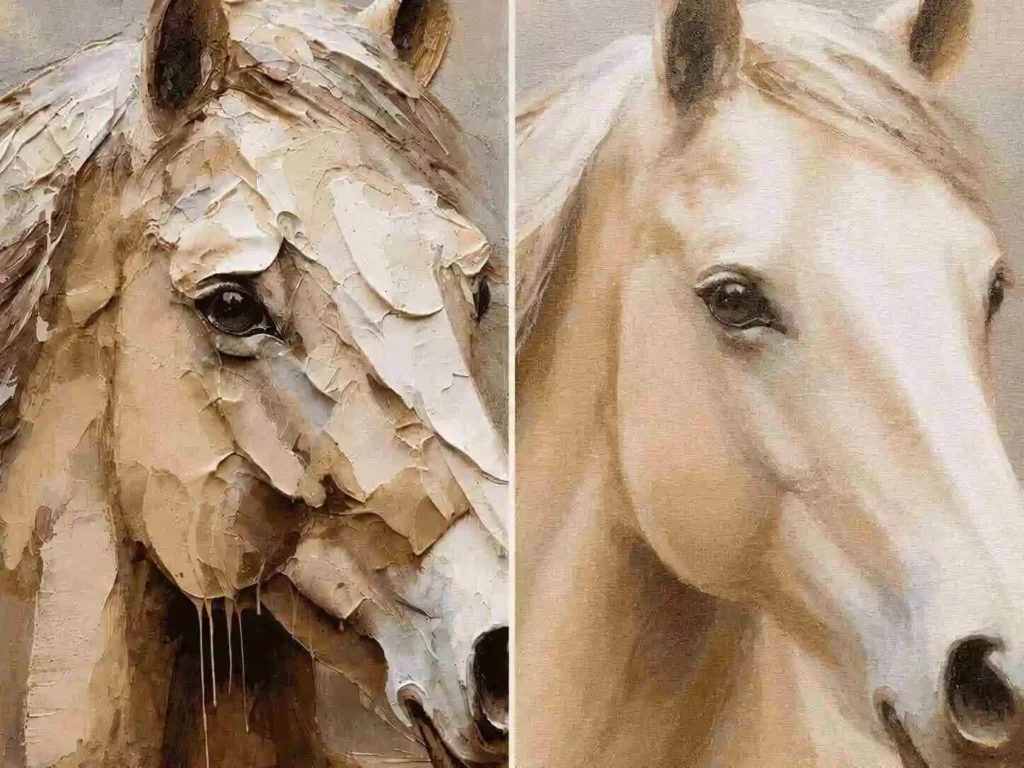
How to Tell if Art Is Truly Hand-Painted (Especially Online)
Section purpose: Answer buyer anxiety about authenticity with simple, practical checks you can apply before purchasing.
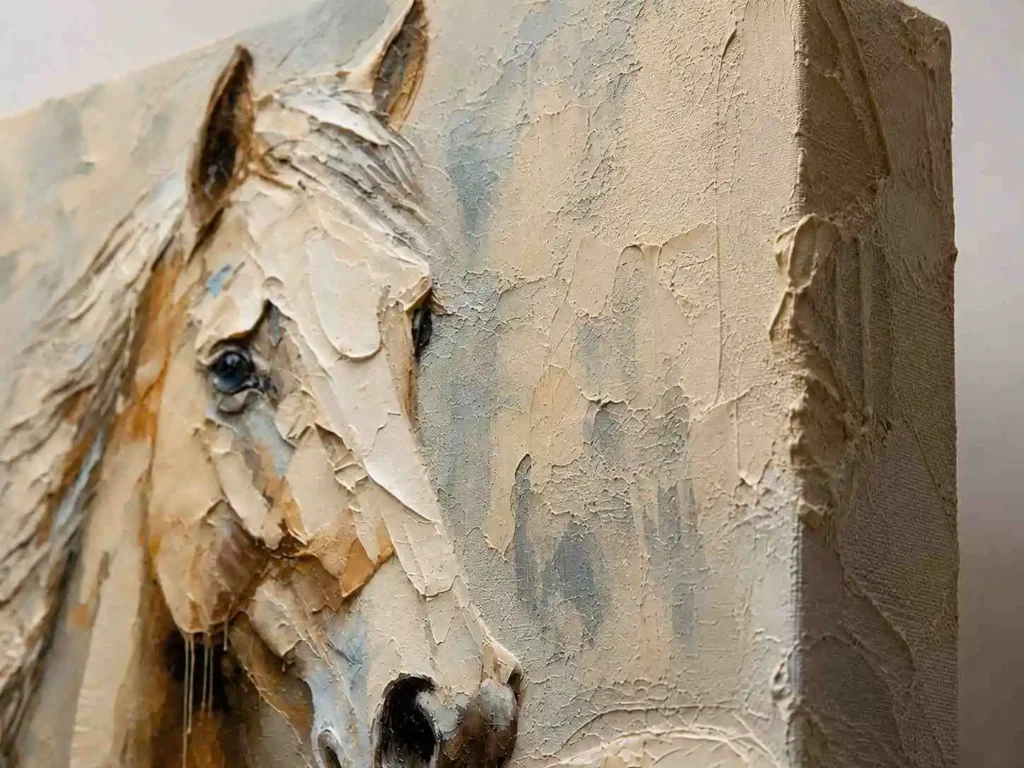
Visual Cues: Texture, Edges, and Light
When you’re shopping online, look closely at the photos:
- Texture: Do you see real, uneven peaks of paint, or does it look like a photo of texture printed flat?
- Edges: In side-angle shots, can you see paint wrapping around the edges of the canvas? Prints usually show the image continuing smoothly.
- Light: In angled photos, do some areas catch the light while others don’t? That’s a sign of real paint.
Hand painted oil paintings like ours often include close-up shots of the brushwork, and sometimes edge or side views.
Reading Product Descriptions Without Getting Misled
Pay attention to the exact wording:
- Look for “hand painted oil on canvas”, “original,” or “hand-painted reproduction.”
- Be cautious if it only says “canvas art,” “wall art,” “printed on canvas,” or “giclée” without clearly saying “hand-painted.”
- “Hand embellished” means some paint added on top of a print, not a fully original painting.
If the listing feels vague or overuses the word “painting” but never says “hand-painted,” assume it’s a print.
Price, Quantity, and Other Red Flags
A few simple checks:
- Price: If something is labeled “hand painted oil painting ” but is extremely cheap (for the size), it’s likely not what it claims.
- Quantity: If a seller claims an original but offers “1,000 in stock,” it’s a print.
- Photos: Only mock-ups, no close-ups? Be cautious.
Trustworthy sellers of hand-painted art are usually clear and proud about their process and materials.
Room-by-Room Guide: Where to Splurge on Oil Paintings vs Use Prints
Section purpose: Walk through the home like a stylist, helping you decide which walls deserve a hand-painted hero and where prints are perfectly fine.
Living Room: Hero Wall Oil Paintings vs Supporting Prints
The living room is where a hand painted oil painting really shines.
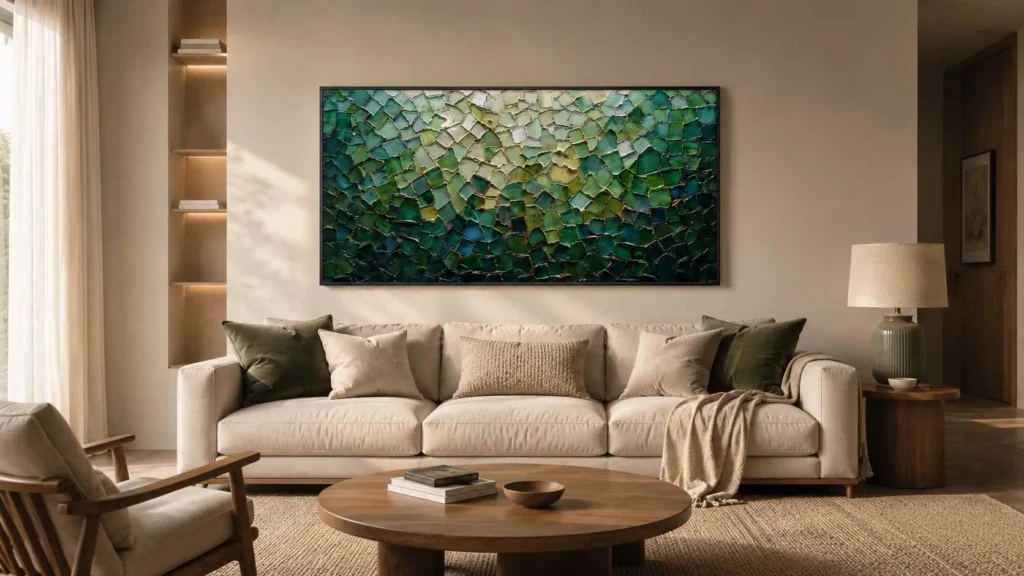
Hero wall (above the sofa or fireplace):
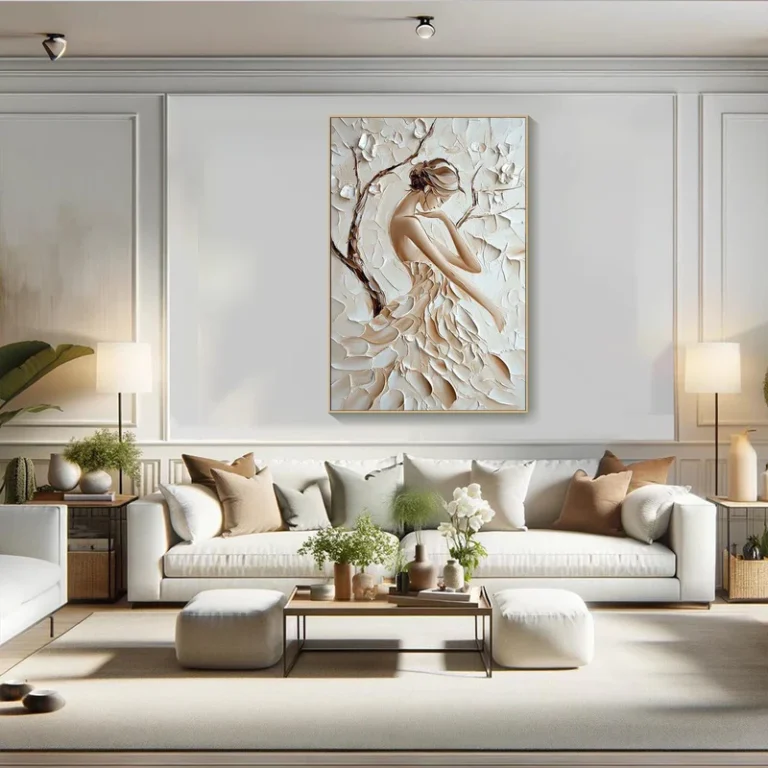
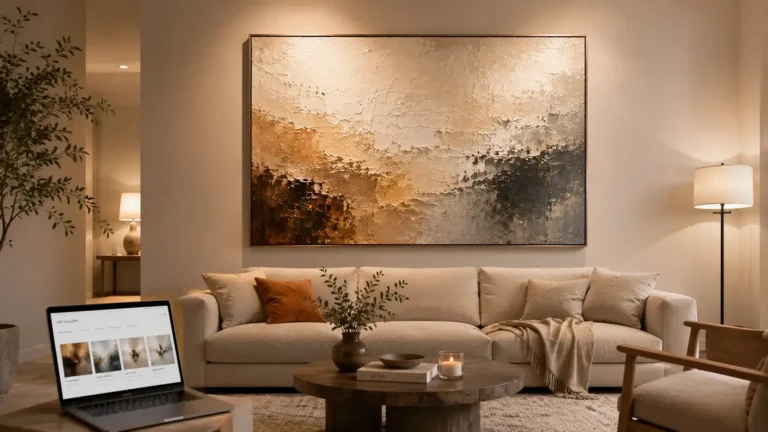
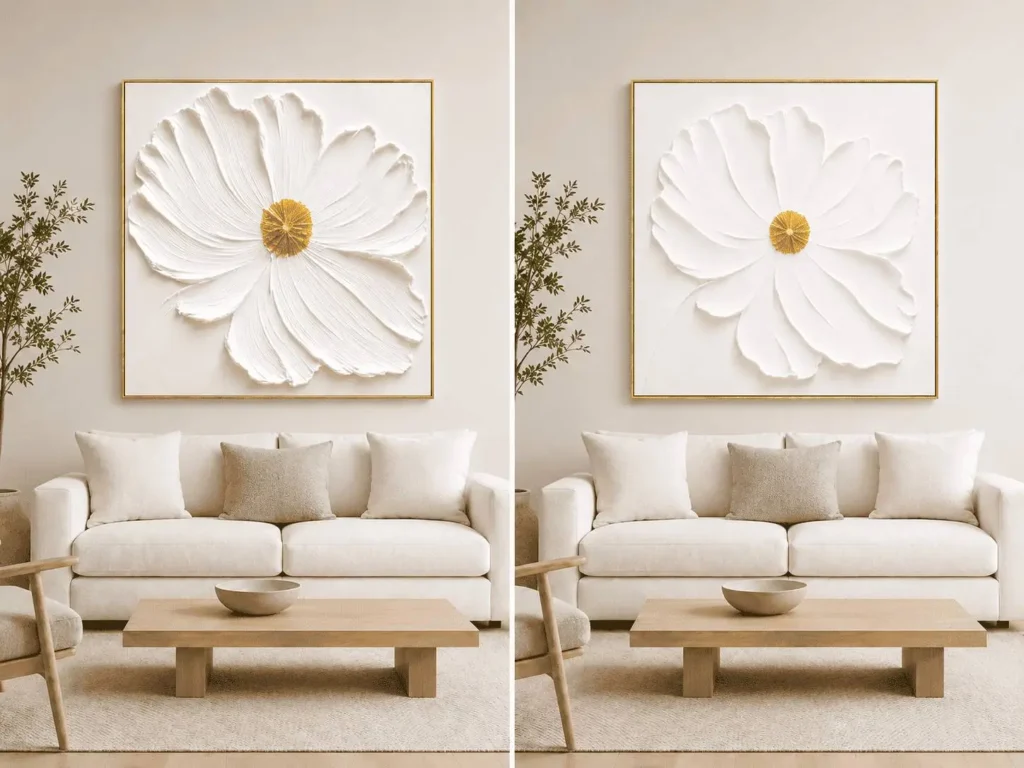
- This is where a large oil painting in Texture Art, Modern Minimalist Art, or Abstract Art can anchor the whole room.
- The texture catches the light from windows and lamps, making the space feel more layered and intentional.
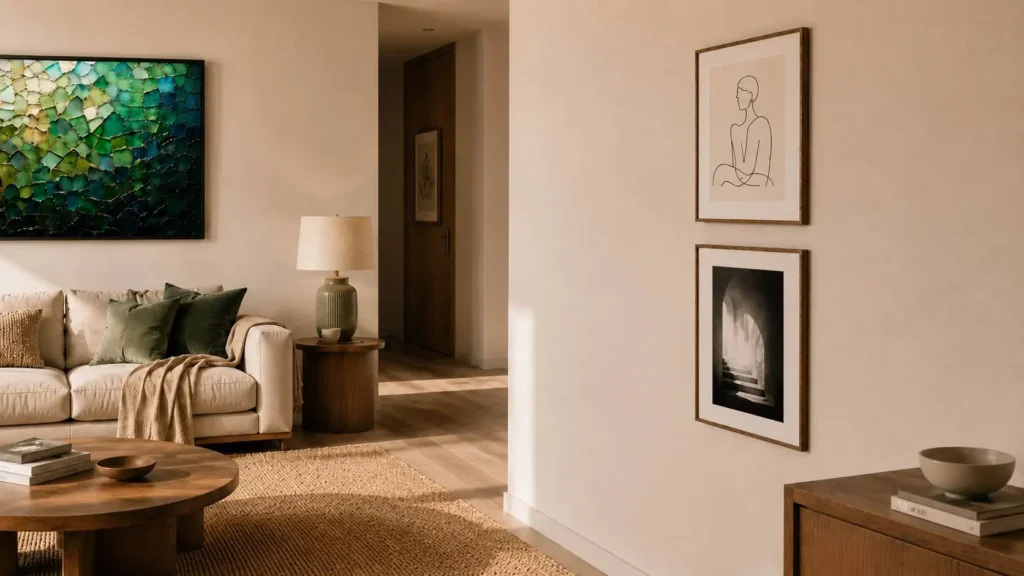
Supporting walls:
- Here, prints work beautifully: smaller colorful art prints, black-and-white photography, or simple line drawings.
- You might create a gallery wall around a TV, featuring a mix of prints and a smaller original painting.
A good rule:
- Invest in a hand-painted centerpiece above the sofa.
- Use prints to fill in secondary walls or shelves.
Bedroom: Calm Retreat or Bold Statement Above the Bed?
In bedrooms, artwork sets your emotional tone.
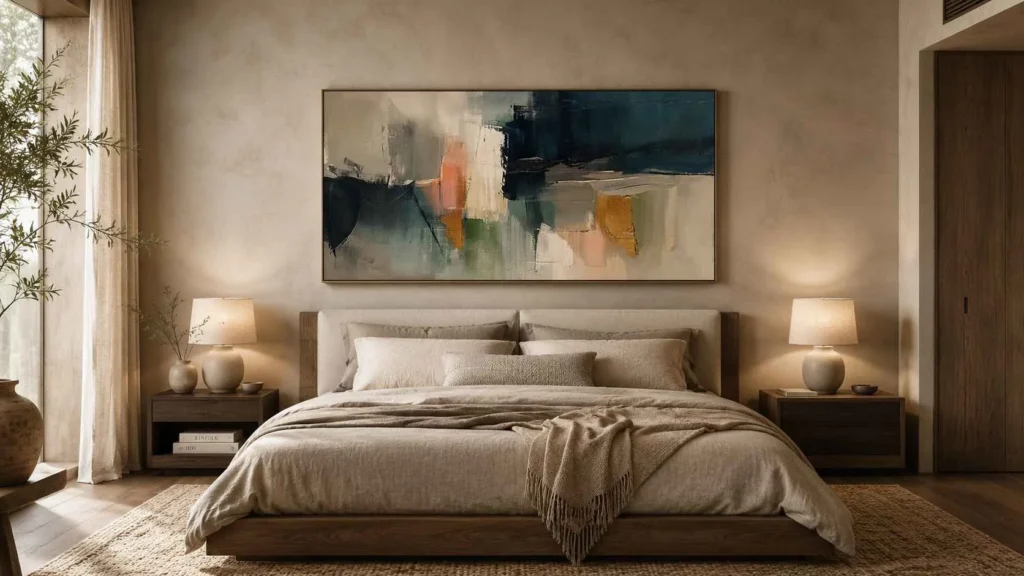
Above the bed:
- A hand-painted painting in soft colors, like a Wabi Sabi Art piece with gentle textures, or a soft Abstract Art can make the room feel like a quiet retreat.
- The texture feels cozy and comforting up close when you’re reading or resting.
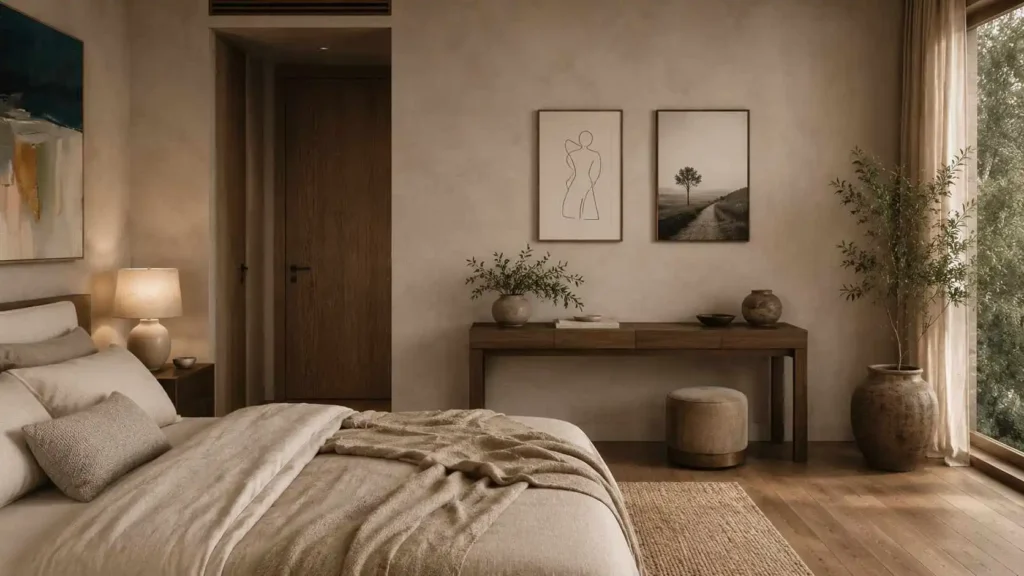
Other walls:
- Prints are great over dressers, in corners, or as a pair over nightstands.
- Simple Modern Minimalist Art prints or muted abstract prints keep the room calm.
If you love color, a hand-painted Colorful Art or Abstract Art piece above the bed can be a statement; balance it with more neutral bedding and furniture.
Dining Room & Kitchen: Conversation Pieces vs Easy-Care Prints
Dining areas are social spaces so that artwork can be a conversation starter.
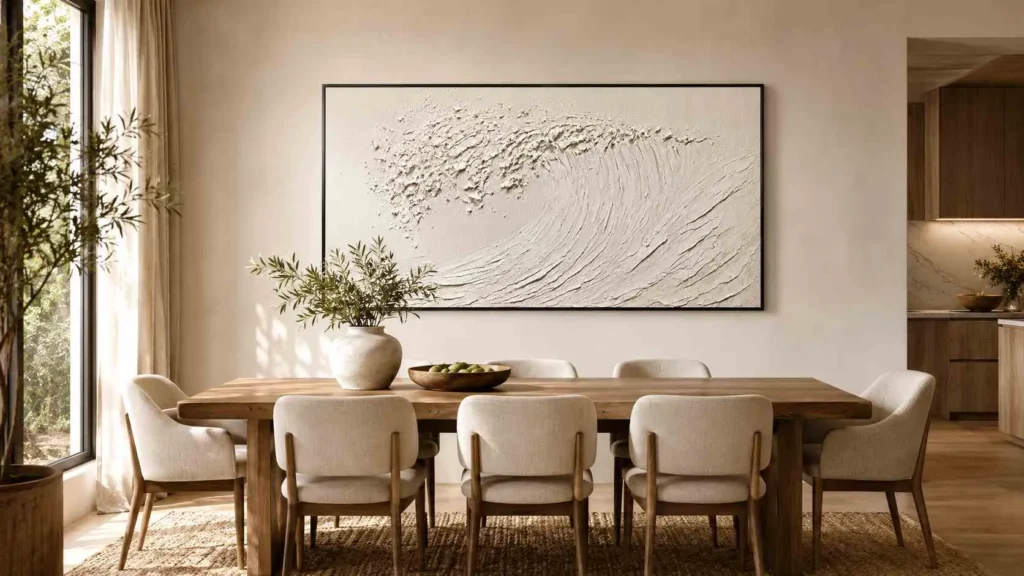
Dining room:
- Above a sideboard or on the main wall, a hand-painted Texture Art or Abstract Art piece adds depth and drama.
- Larger pieces here feel like part of the architecture, making dinners feel more intentional and “grown up.”
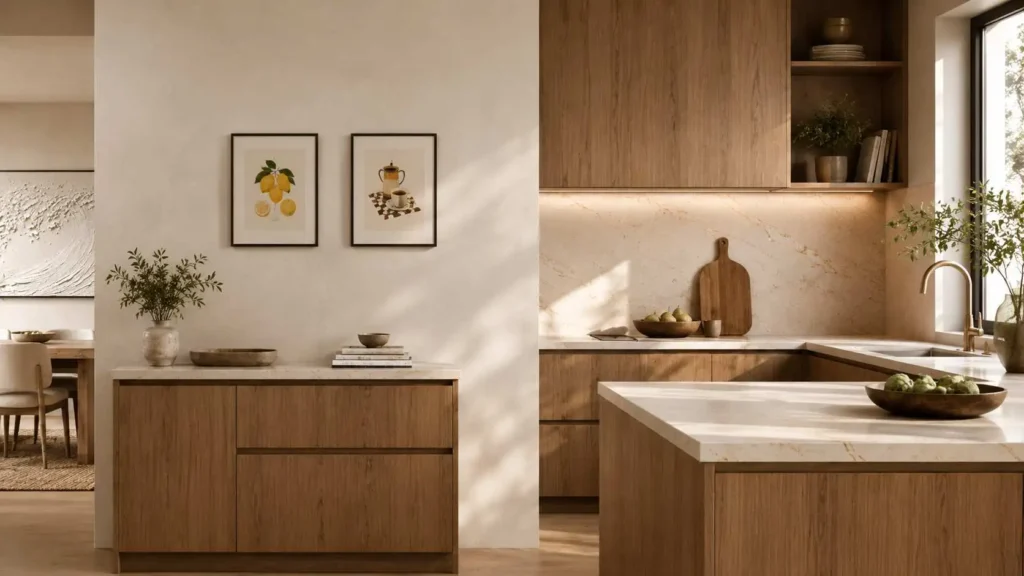
Kitchen and casual dining:
- Kitchens see a lot of heat, moisture, and activity, so prints are practical: a cheerful, colorful art print, a black-and-white photograph, or a smaller graphic.
- If you do use oil painting near the kitchen, keep it away from direct steam and splatters.
Think of the dining room as a great place for one strong hand‑painted piece, and the kitchen as a good place for playful, easy‑to‑change prints.
Entryway & Hallways: First Impressions and Storytelling
Your entry is your home’s opening scene.
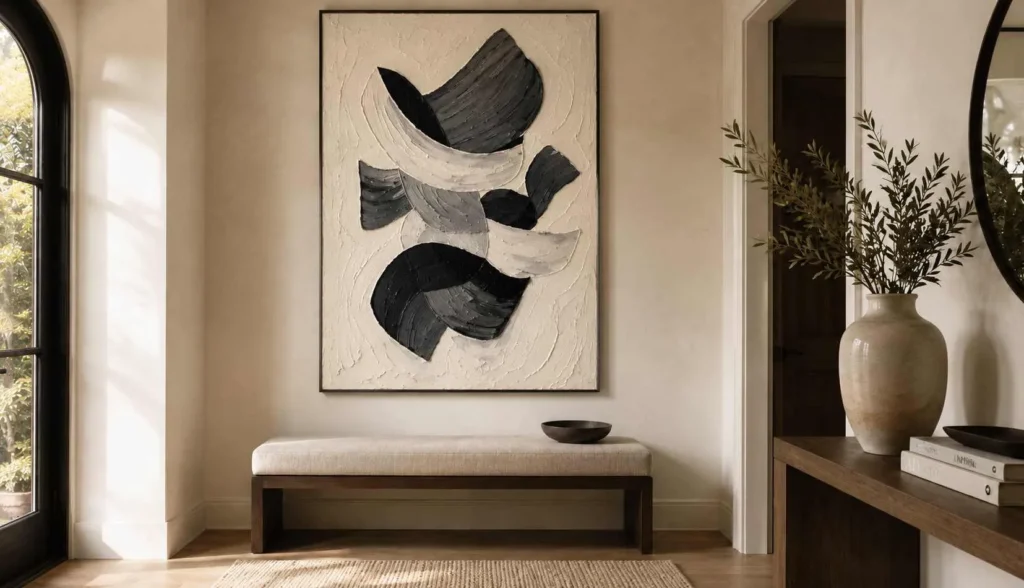
Entryway:
- A single hand painted oil painting, perhaps a famous oil painting reproduction, or a striking Abstract Art set the tone the moment someone steps inside.
- It signals that your home is curated, not just decorated.
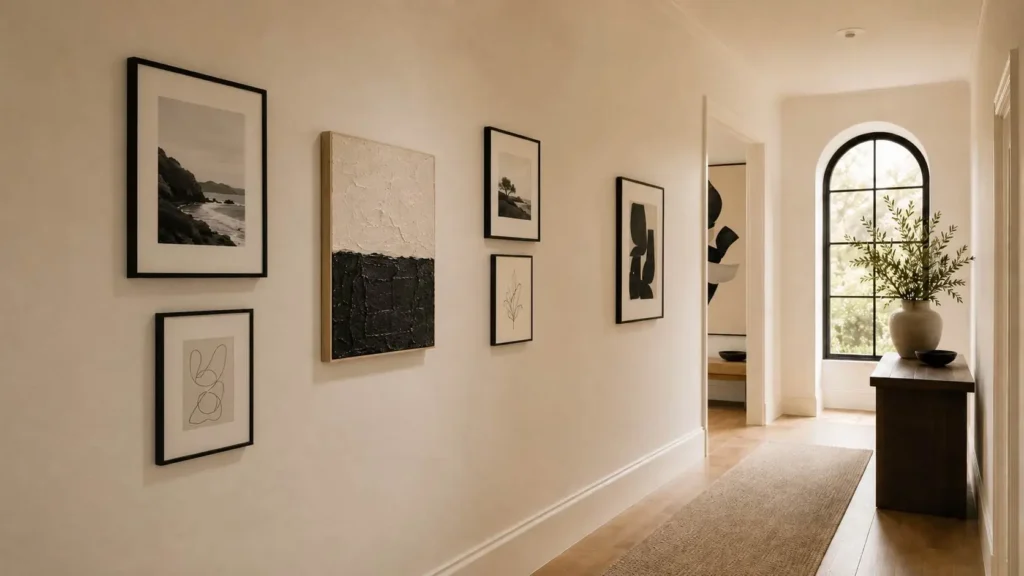
Hallways:
- Perfect for a mix: a row of prints (family photos, minimal graphics) plus one or two small hand‑painted pieces for surprise moments of texture and depth.
- This is also a great area for Custom Art, like a painting inspired by a favorite travel photo.
Home Office: Daily Inspiration vs Flexible Backgrounds
In a home office, art works hard.
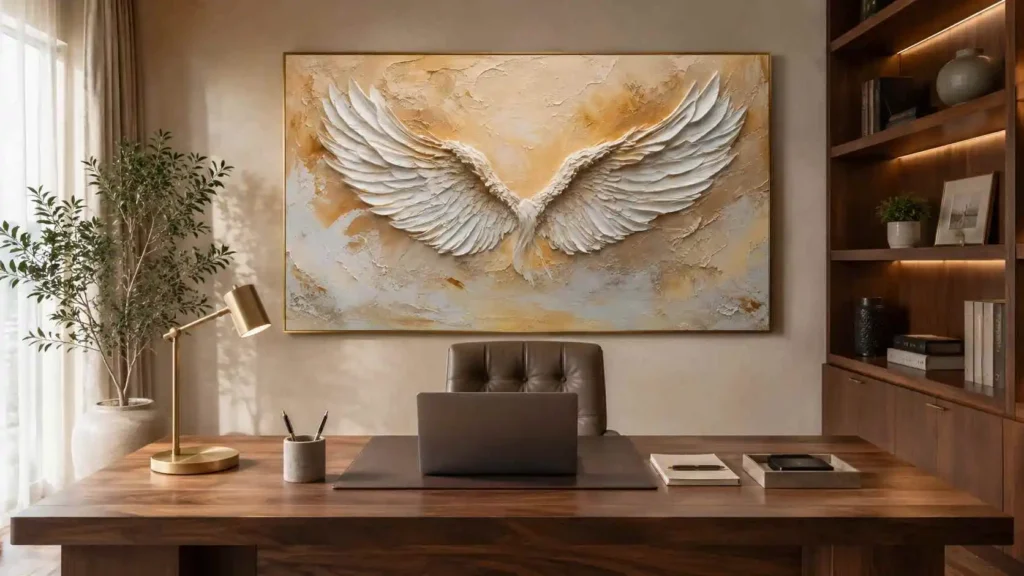
Behind the desk (on camera):
- This is a perfect spot for a Modern Minimalist Art or Abstract Art oil painting.
- The texture reads well on video and gives a subtle “I care about design” message.
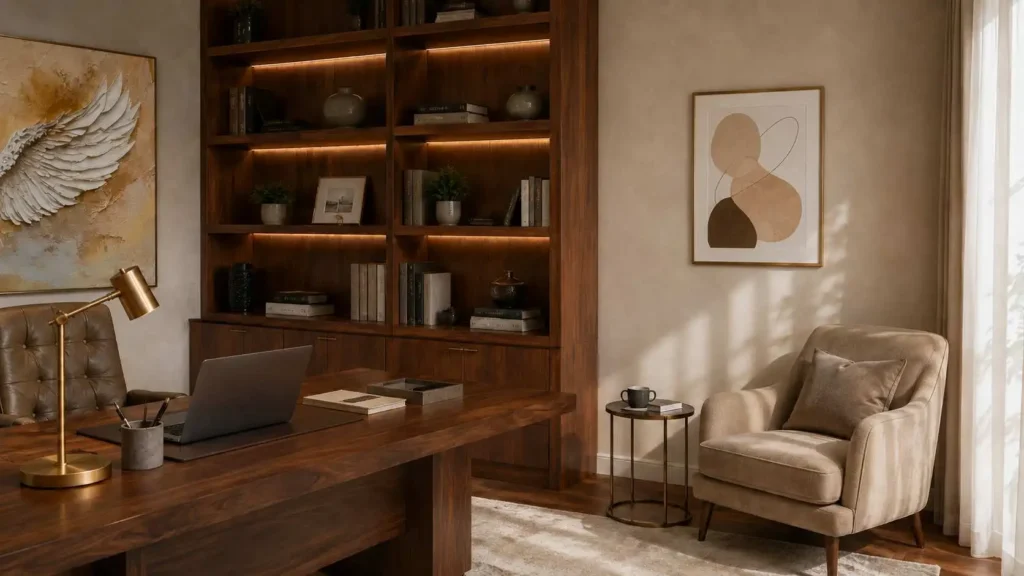
Other walls:
- Prints shine here, motivational phrases, photography, or simple art you can swap out as your work or interests change.
- A small hand-painted Wabi Sabi Art piece in a reading corner can add calm to busy working days.
If you’re on a budget, choose one hand-painted piece that you’ll see often and keep the rest of the prints.
Style Scenarios: How Oil Painting vs Print Looks With Your Decor
Section purpose: Help you visualize specific style moods (minimalist, cozy, colorful, etc.) and see how originals and prints play different roles within each.
Modern minimalist
If your style leans toward clean lines, neutral palettes, and clutter-free spaces:
Use one large Modern Minimalist Art or subtle Abstract Art oil painting as a focal point, and keep the rest as clean prints, line drawings, black‑and‑white photos, or soft geometric art.
The contrast between a quiet room and one textured original feels chic and deliberate, like a gallery.
Cozy & colorful
For homes that feel warm, inviting, and a bit playful:
Let a hand‑painted Colorful Art or Abstract Art piece star in your living or dining room, then echo one or two of its colors in nearby prints for a layered, social feel.
Earthy Wabi Sabi
If you love natural materials, soft neutrals, and a slightly imperfect, lived-in look:
Choose hand‑painted Wabi Sabi Art with muted tones, organic shapes, and visible texture for bedrooms, reading nooks, or spa‑like bathrooms, complemented by simple minimalist prints and nature photography.
Gallery walls
Gallery walls can easily look cluttered if everything has equal “weight.” To keep them curated:
Mix 1–3 small original oil paintings with prints (typography, line art, photos) to avoid a flat, overly mass‑produced look, and tie everything together with a shared color palette or frame style.
This mix gives you the best of both worlds: richness from the originals, flexibility, and budget-friendliness from the prints.
Matching Texture, Minimalist, Colorful & More to Your Rooms
Section purpose: Translate the comparison and room advice into concrete choices using Texture, Modern Minimalist, Colorful, Abstract, Wabi Sabi, Custom, and famous oil painting collections.
Texture Art
Texture Art is perfect when you want a wall to feel special without shouting, especially for statement walls where you want quiet luxury above the living‑room sofa, on a dining‑room feature wall, or in a calm, layered bedroom.
Modern Minimalist Art
If you want your home to feel light and uncluttered, Modern Minimalist Art is your friend.
Modern Minimalist Art Ideal for clean, airy bedrooms and home offices. Use hand‑painted minimalist pieces above the bed or behind the desk, and pair with simple line‑art prints elsewhere.
Colorful Art & Abstract Art
Colorful Art & Abstract Art are best for energetic living and dining areas. A hand‑painted colorful abstract can set the mood, while prints on nearby walls echo or balance its colors.
Wabi Sabi Art
Wabi Sabi Art celebrates imperfection, natural tones, and quiet beauty. For soft, grounded corners in bedrooms, reading spots, meditation spaces, spa‑like bathrooms where you want to exhale and feel calm.
Famous oil painting & Custom Art
When you want a specific image or story. Choose a hand‑painted version of a famous oil painting, or create Custom Art in your exact size and palette, even from a meaningful photo.
How to Decide Oil Painting vs Print: A Simple Buying Framework
Section purpose: Give a simple decision process so you can confidently choose where to invest in hand-painted art and where to opt for prints.
Step 1 – Identify Your Hero Walls vs Supporting Walls
Walk through your home and ask:
- Which walls do you see first when you enter a room?
- Which walls are visible from multiple rooms?
- Where do you sit or stand the longest (so you’ll actually look at the art)?
These are your hero walls: above the sofa, above the bed, behind the dining table, in the entryway.
Hero walls are usually where a hand painted oil painting is worth the investment. Supporting walls are where prints shine.
Step 2 – Choose the Mood You Want in Each Room
For each room, pick 1–2 words:
- Living room: cozy, upbeat, serene, dramatic?
- Bedroom: restful, romantic, minimal, cocoon-like?
- Office: focused, creative, calm?
Then match:
- If you want cozy, grounded, luxurious → lean toward hand-painted pieces (Texture Art, Wabi Sabi Art, Abstract Art).
- If you want light, flexible, casual → use more prints and a few carefully chosen originals.
This keeps your choices aligned with how you actually want to feel in the space.
Step 3 – Plan Your Art Budget Around 1–3 Key Originals
Instead of trying to make every wall an original, think in terms of a curated mix.
A simple approach:
- Choose 1–3 main rooms to invest in (often living room, bedroom, dining room, or office).
- For each, select one hero wall for a hand painted oil painting.
- Use prints and smaller pieces to fill in around them.
This gives you that “designer” feel without needing an unlimited budget.
Step 4 – Check Authenticity Before You Click “Buy”
Before purchasing anything labeled “hand-painted”:
- Look for clear photos showing brushstrokes and edges
- Read descriptions carefully for “hand painted oil on canvas.”
- Be wary of ultra-low prices for very large “originals.”
- Check whether the artwork is made to order, a hand-painted reproduction, or a one-of-a-kind
This last check turns your plan into confident, real purchases.
Common Oil Painting vs Print Mistakes to Avoid
Section purpose: Save you from size, placement, and quality mistakes that make art look cheaper or out of place.
Going Too Small on Big Walls
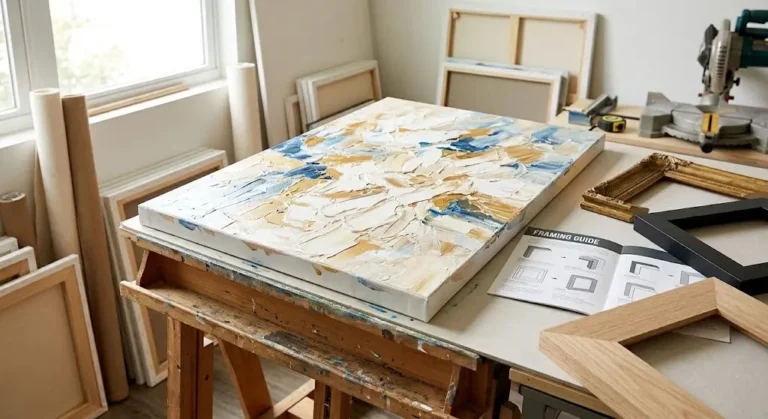
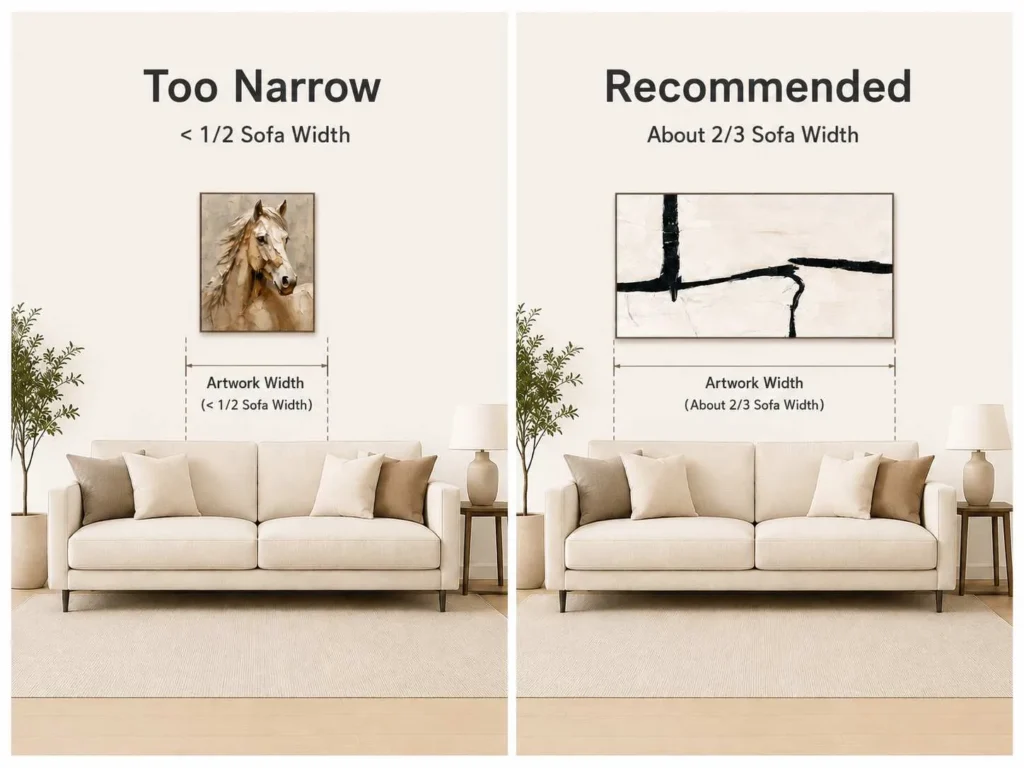
Above a sofa or bed, art should generally be at least two‑thirds the width of the furniture. If budget is a concern, choose one medium hand‑painted piece and surround it with prints, or use Custom Art to get the right size.
Overusing Generic Prints Everyone Has Seen
There’s nothing wrong with popular prints, but if every piece in your home is a widely used image, your space can start to feel a bit like a staging home.
A few ways to avoid that:
- Add at least one hand painted oil painting in each main area
- Mix in less common styles like Wabi Sabi Art, textured neutrals, or Abstract Art from smaller artists
- Use custom or personal photos turned into paintings for something only you have
Ignoring Room Lighting and Glare
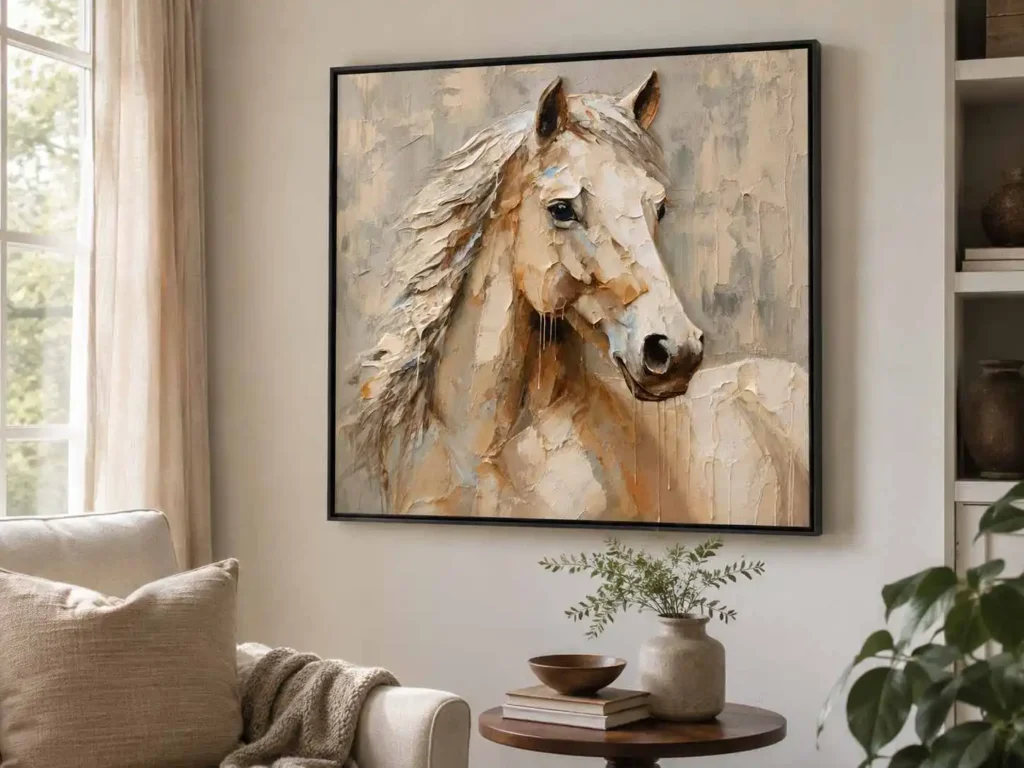
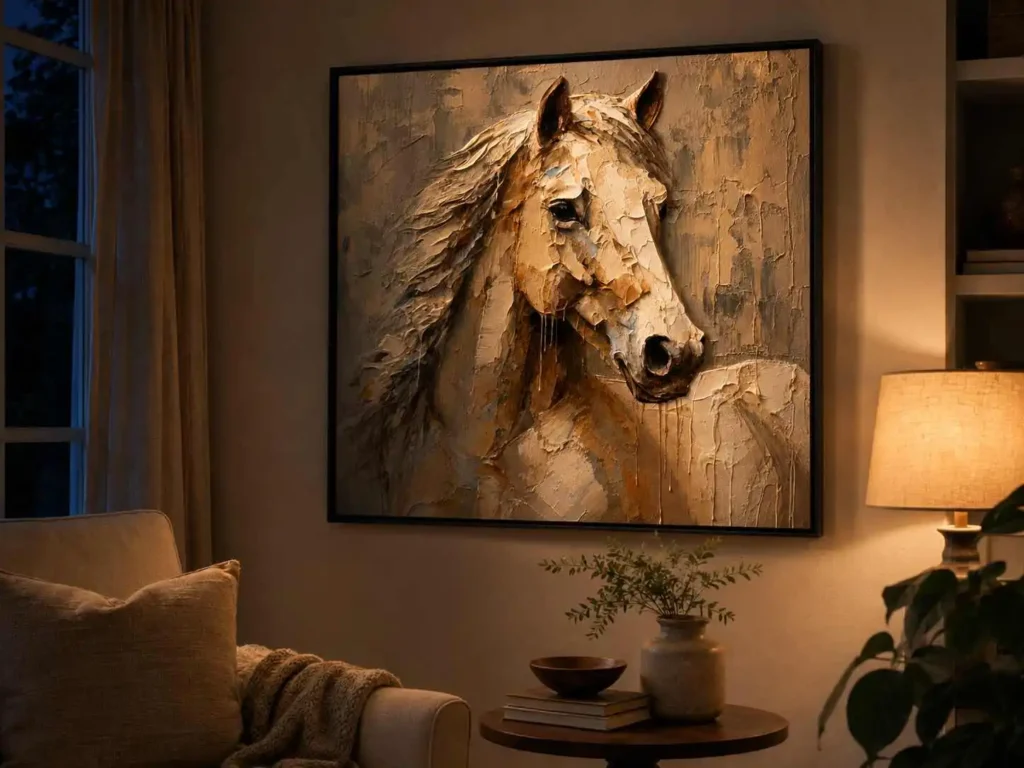
Light affects how both prints and oils look:
- Glossy prints can show glare in bright rooms. Matte finishes are more forgiving.
- Oil paintings with texture can look amazing in side light (like from a nearby window or lamp), making textures “pop.”
If you have a very bright, sunny wall, avoid high-gloss surfaces right in the glare. In dimmer areas, the texture of a hand painted oil painting can keep the artwork from looking flat or lost.
Not Considering How Rooms Connect
Homes feel more curated when rooms flow visually into one another.
To create that:
- Repeat a color family (warm neutrals, cool blues, earthy tones) across several rooms.
- Mix styles in a controlled way (e.g., minimalist + Wabi Sabi throughout, with pops of colorful abstract)
- Use a consistent mix of originals and prints, don’t make one room feel wildly more “serious” than all the others unless that’s a deliberate choice.
How Our Hand-Painted Collections Support Your Room-by-Room Plan?
Section purpose: Gently connect all the advice back to our offerings, showing how you can implement this plan using our paintings.
Choosing a Signature Piece for Each Main Room
Start by picking one signature hand painted oil painting per key room:
- A textured Abstract Painting for living room
- A calm Wabi Sabi Art piece for the bedroom
- A Colorful Art work for the dining room
- A minimalist or Abstract Art piece for the office
These become your anchors, the pieces you decorate around, not just “over.”
Using Sizes and Custom Art Options to Perfect the Fit
Not every wall is standard. That’s where Custom Art helps:
- Need a very wide piece above an oversized sofa? Custom size.
- Love a color palette but need it slightly softer or bolder? Custom colors.
- Want a painting based on a favorite photo? Custom from-photo artwork.
Custom options make it easier to avoid the “almost right, but not quite” feeling that can come with mass-produced pieces.
Building Around Your Originals With Coordinated Art
Once your main oil paintings are chosen:
- Add prints that echo their colors or shapes
- Incorporate smaller hand-painted pieces in hallways or corners
- Mix in personal items: framed photos, travel mementos, mirrors
The result is a layered, collected home where every wall has a purpose, even if only a few pieces are originals.
Bringing It All Together: A Home That Feels Collected, Not Just Decorated
When you understand oil painting vs print in terms of mood and rooms, not just materials, it becomes much easier to make choices you’ll be happy with for years.
- Use hand painted oil paintings on hero walls to add texture, presence, and quiet luxury.
- Use prints on supporting walls for flexibility and budget-friendliness.
- Let each room’s mood guide you: calm Wabi Sabi Art in the bedroom, Colorful Art or Abstract Art in the living room, Modern Minimalist Art in the office.
A few simple next steps:
- Walk through your home and mark your hero walls.
- Decide the mood for each key room.
- Choose 1–3 hand-painted pieces as anchors, then fill around them with prints and smaller works.
When you’re ready to start curating, explore hand-painted options in styles like Texture Art, Modern Minimalist Art, Colorful Art, Abstract Art, Wabi Sabi Art, or consider Custom Art or a famous oil painting reproduction for a piece with a specific story.
The goal isn’t perfection; it’s a home that feels like you, layered over time with art that you genuinely enjoy living with every day.
FAQ About Oil Painting vs Print for Home Decor
Is an oil painting really worth it compared to a print?
Yes, if it’s on a main wall you see every day. A hand painted oil painting has real texture and depth, so it feels more luxurious and personal than a flat print.
Where should I use oil paintings and where are prints fine?
Use oil paintings on “hero walls” like above the sofa, bed, or in the entryway, and use prints on smaller or secondary walls where you want flexibility and lower cost.
How can I tell if something is truly hand-painted when buying online?
Look for close-up photos of brushstrokes, clear wording like “hand painted oil on canvas,” and be cautious of very low prices and large stock numbers that claim to be originals.
Do oil paintings work with modern or minimalist decor?
Absolutely. Modern minimalist or abstract oil paintings with simple shapes and limited colors can be beautiful focal points in clean, streamlined spaces.
What if I need a specific size or color to match my room?
Consider custom art; many studios will create a hand-painted piece in your exact size and color palette, or even from a photo that’s meaningful to you.